
News
How to Build a 100G Data Center: Architecture, Cabling, and Equipment Selection
Upgrading your data center network to 100 Gigabit Ethernet (100G) is no longer a luxury but a necessity for many modern enterprises. As discussed in our previous post “When to Upgrade to 100G“, the relentless growth of data traffic, fueled by cloud computing, video streaming, real-time applications, and particularly the surge in AI/ML workloads, is rapidly outstripping the capabilities of traditional 10G and 40G networks.
10 May, 2026
Modernizing Campus Networks with Fabric Architecture
28 Jan, 2026
What Is an Orthogonal Architecture?
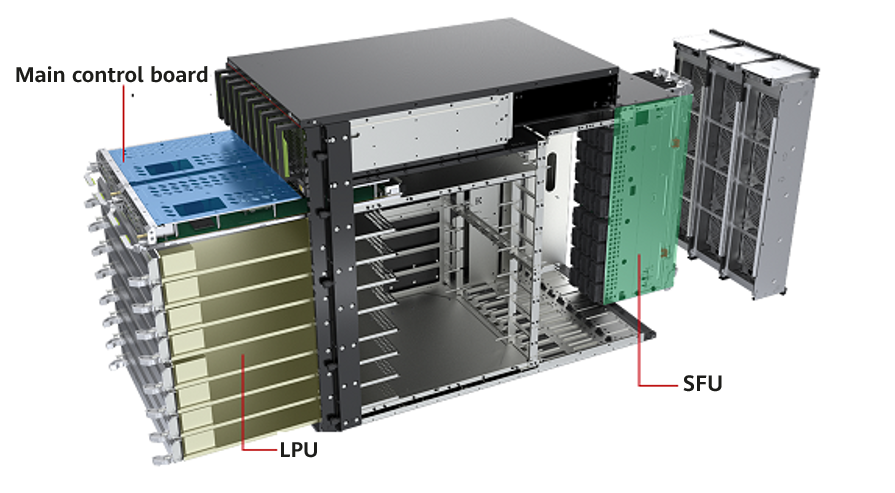
An orthogonal architecture is a hardware structure that orients LPUs or interface boards orthogonally to SFUs. This eliminates the need for a backplane and its associated traces, thereby achieving high transmission rates and overcoming the line rate bottleneck in the traditional backplane architecture. In addition to featuring high scalability and a large switching capacity, an orthogonal architecture also ensures low signal attenuation. It is employed on core routers and core DC switches.
13 Jul, 2025